In this article, we are going to look at white line disease in horses…
What is White Line Disease?
First of all white line disease is a misnomer. It is not a disease at all. It does seem to be an epidemic, though, so teaching horse owners to deal with it is a top concern.
White line disease is considered to be a delaminating process brought on from mechanical stress, environmental conditions such as moisture, and nutrition which affects the inner hoof wall attachment.
White line disease can affect horses and ponies of any breed, age or gender. It can occur in one or all four feet. It occurs in both barefoot and shod horses.
Where does white line disease in horses start?
White line disease originates as a separation between adjacent layers in the hoof wall starting at the toe, quarter, and/or heel. The separation occurs between the stratum medium and stratum internum within the non-pigmented area of the hoof wall. Although the white line does become involved, it is actually the join between the pigmented and the non-pigmented portion of the hoof wall that is first affected. Seedy toe is another name for white line disease.
As separation progresses up the hoof and into the white line, it can cause significant pain, lameness and discomfort and affect the horse’s mobility.
What does white line disease in horses look like?
The first signs are cracks and fissures that occur in the non-pigmented portion of the hoof wall. If left unchecked these breaks in the hoof wall integrity collect with dirt and grit and a cavity forms which may well extend into the white line area which connects the hoof wall and the sole of the hoof.
As the white line disease progresses, where healthy hoof walls and white lines should be, you may see stretched white lines and deep grooves and cavities filled with black and rotting material. Some horses develop flares that won’t grow out, hooves that won’t hold a shoe, soles that remain flat in spite of the best care, and recurring abscesses.
Keratin is the main protein which the hoof wall is made from. In horses that develop white line disease, the healthy hoof wall tissue is infiltrated by bacteria or fungi which produce enzymes that break down keratin. This can lead to further separation which can be difficult to get rid of.

What causes white line disease?
In the past, a broad spectrum of bacteria, fungi, viruses, yeasts, etc. were blamed. Michael Wildenstein of Cornell University published a very helpful study in Hoofcare and Lameness magazine and the American Farriers Journal that identified fungal infection as the main cause, with all of the other pathogens following behind.
A fungus infection within the separation will lead to damaged cells in the hoof horn. This will ultimately lead to weak hoof structure, reduced performance and lameness.
If the problems are all coming from fungal invasion, then it should be simple to open up or clean out the damaged areas, treat them with an anti-fungal product, and have no more problems. Farriers and horse owners everywhere often find though that this is not the case, as hooves continue to fall apart before their eyes, indicating that a horse’s diet may also play a crucial role in preventing white line disease.
Is a fungus infection the only reason for white line disease?
Is fungus really the problem? Certainly, it is a part of the problem. If you live where Forageplus is based, in wet and windy North Wales, you know that constant exposure to water softens hooves and makes them susceptible to damage. The fungi then have a field day with the horse’s hooves.
Where hooves are also allowed to grow long or develop medial lateral imbalance this then causes extra stress and strain on the connection which can be prised apart by mechanical forces.
However, the bacterial and fungal invasion disease process is most certainly secondary to the delamination, between the inner and outer hoof-wall, which leads to the hoof-wall separation.
What are the risk factors for white line disease in horses?
The main risk factors for horses developing white line disease are:
- Hoof conformation: Certain hoof conformations put additional strain on the hoof wall that can lead to separation, including long toe and/or under-run heel, club foot, sheared heels
- Limb conformation: Certain limb conformations will load the hoof more laterally putting more pressure and additional strain on the lateral aspects of the hoof
- Postural asymmetries: As with limb conformation any postural problems particularly in the shoulders may result in the limb loading the hoof unevenly causing more pressure on the connection between the laminae and the white line
- Wet, humid conditions: These conditions can soften the hoof and allow debris to enter the separation which brings bacteria and fungi into the area
- Hot, arid conditions: These conditions can make the hoof more brittle and prone to cracking, fissures and separation
- Vascular damage: Injuries or hoof conformation that impairs blood flow to the hoof wall can lead to tissue death and hoof wall separation
- Poor nutritional mineral balance and availability in the daily diet
- Poor protein and overall balance and availability of the essential amino acids in the daily diet
- Poor omega-3 levels in the daily diet
What are the first signs of white line disease?
Horses often don’t show any signs of discomfort until the hoof wall separation and white line disease has progressed significantly, so noticing any delamination before it gets too bad is critical.
Your farrier or hoof trimmer may notice hoof wall separation during routine hoof care. Depending on the depth of the separation, they can clean out the debris and reach the area of solid connection between the hoof wall and the white line. Opening the infection up to air always helps. Using a wire brush daily can help keep the affected area clean and stimulate healthy tissue recovery.
If the separation cavity is deep, grey/white powdery hoof material indicative of damaged tissue may be seen in the area.
Early signs of white line disease include:
- disruption between the white line and the outer hoof wall with debris collecting in the cavity
- lameness when grit, small stones press on the sensitive structures which create the white line junction with the sole
- flaring of the hoof wall if the cavity is large as this creates a crimping stress on the sensitive laminae
- cracks and splits if the cavity is large
- abscessing, this happens when the disease reaches the sensitive structures and creates a large infection
- a hollow sound when the hoof wall is tapped
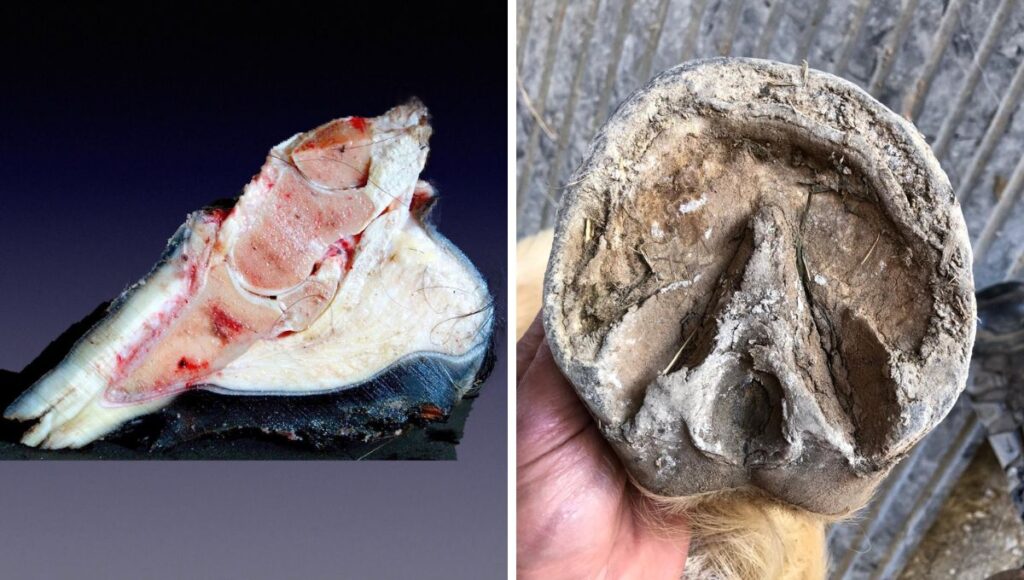
In severe cases, and when the white line disease is well advanced, noticeable changes in the shape of the hoof capsule can become apparent. When the infection is significant in area, the attachment between the hoof wall and the distal phalanx can be weakened which can cause rotation and changes in the hoof conformation.
Rotation can cause an indentation (a concavity or “dish”) in one area of the hoof and a bulge on the opposite side. Horses which have this extent of hoof wall separation and white line disease will be very likely to show lameness and discomfort.
In advanced cases, where separation has progressed significantly, the hoof capsule can become distorted and the distal phalanx may rotate within the hoof capsule. These cases require extensive rehabilitation with possible hoof resection and very careful hoof care, usually in a dry and clean environment.
How to reduce the risk of white line disease in horses?
White line disease must be conquered with a four-part attack:
- Making adjustments to the environment so that hooves do not become overly wet or dry
- Making adjustments to the environment so that the hoof is not exposed to corrosive elements such as urine or the tar in road planings
- Making adjustments to the diet so that an optimum balanced diet matched to forage is fed every day, ensuring the production of healthy hoof horn
- Careful hoof trimming and or shoeing to reduce excessive mechanical strain that can cause hoof wall separation
- Early treatment of any infection and keeping debris out of the area of separation
- Careful postural training to reduce any body asymmetries creating uneven hoof loading
- Pain relief if the pain is causing uneven hoof loading
What is the best environment to beat horse white line disease?
Horses evolved to live mostly in high, dry arid regions and so their hooves do best if they are not constantly saturated with moisture. Wetness, mud and soft ground are the hoof’s fiercest enemies, and the harm done to them by standing for days on end in the rain can overshadow the good done to the body by 24-hour turnout for constant movement opportunity.
Depending upon where you live in the world, wet conditions might be difficult to avoid. If you have a choice then allowing the horse to stand in a dry covered area or bedding on dry shavings in a stable, for part of a 24 hour period, will allow the hooves to dry out. We have to carry out many compromises when managing horses, so sometimes you have to accept that a stable is better than a constantly soaked hoof which will lead to white line disease.
Stables must be kept clean so horses do not stand in corrosive urine. Do everything you can to dry up the horse’s terrain or bring the horse in for drying-out periods.
Where the Forageplus horses live in North Wales it rains from autumn right through the winter and into spring. Duck ownership would perhaps be better! The horses have access to pasture for at least twelve hours out of every twenty-four. They get time out in fields which are as mud-free as possible with longer grass to preserve the sward.
The horses also have access to hardcore areas and field shelters with rubber matting. However, no matter how hard we try we cannot keep the hooves dry. Everywhere is damp, but we don’t fret as the horses do get time on the hard standing areas. There will be drier days but we do have to accept that the best we can do is keep them the way we do.
Come spring the horses might have a few little areas where the white line is compromised, the frogs might look a little sodden but in the main the hooves are fine.
What is the best horse diet to beat white line disease?
Hooves are dynamic, changing structures which are highly influenced by the basic nutrition available in the daily diet. Hooves however, along with skin are often prioritised, by the body, to be low down the list of priorites when nutritional resources are in short supply.
The hoof’s nutritional needs are high because it is a very active structure that is constantly growing and restructuring. Good nutrition plays a vital role in hoof health and stopping white line disease, with protein, fats, and minerals being the building blocks of healthy hoof nutrition.
The basics always start with the nutrition provided by the greatest proportion of the diet which should always be grass, hay or haylage. The reason for this is that imbalances are always present in all plants which impact the levels of certain minerals and protein/amino acids in the diet. The greater the amount of a plant in one location, in the diet, then the greater the potential for mineral and amino acid imbalance which must be corrected.
These minerals and amino acids are the ones which enable the hoof to grow effectively. Minerals power the process of breaking and building the amino acids into the thousands of proteins the body makes to run and maintain itself as a healthy efficient machine.
It is true that the more you do with your horse, the more demands you place in terms of athletic activity, the more you need to get this right.
It is also crucial to get the balance right in young and growing horses whose needs are very high. When their needs are not met they still grow but structures like hooves will suffer as being secondary to growth.
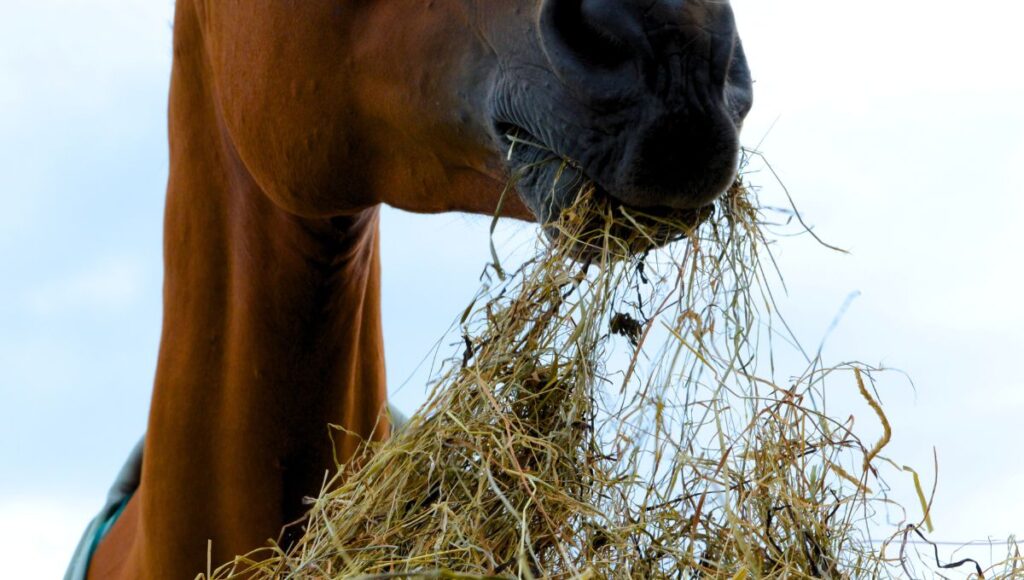
How are protein and amino acids critical for stopping white line disease
The hoof wall and related sole and white line structures are over 90% protein. Inadequate protein, or a deficiency in the essential amino acids, and particularly Methionine, limits the ability to produce the hoof wall’s structural protein known as keratin. Lysine is also an often deficient amino acid in grass and hay that is very important in hoof protein.
Here in the United Kingdom, it is common, due to our very variable weather, to see very poor protein levels in the hay and haylage fed to horses. Our database shows that over 85% of hay is under the 8% total protein needed for adult horses to have optimum health.
Young horses, breeding horses in the last trimester or lactating and performance horses need high levels of protein in the diet, 10-12% in the total daily diet. This can be really difficult to achieve with the hay or haylage that is available here in the United Kingdom.
In our experience, it is always better to test hay to check protein levels, particularly if white-line disease has been a problem for your horse. If this can’t be done, and there are hoof quality issues, then assume protein is low and that certain amino acids will be at poor levels.
For an adult horse up to light work, then 8% protein, in the total diet, is really the ideal. The minimum would be 7%, as long as hay was fed ad-lib, but if you start looking at data for the UK average in hay and haylage then 6%, or even dipping to under 5%, is typical.
Average Protein Levels in Hay and Haylage 2022/23
The figures in the tab;e below are from the extensive Forageplus database of statistical analysis of hay and haylage samples. Our analysis of forage gives a unique advantage in studying and observing nutritional elements which affect horse health.
| Less than 6% | 43% |
| Less than 8% | 43% |
| Over 8% but under 10% | 11.3% |
| Between 10% and 12% | 1.9% |
Where you get this type of low protein you are likely to have certain essential amino acid shortages which means poor keratin repair and a horse which will struggle in one or more areas with white line disease being common because the hoof structures are so dependent upon protein.
We assume then that where there are issues such as soft soles, crumbling hooves, fissures originating from the bond between the inner an outer hoof wall failing or white line infection that protein is low. The results of a forage analysis usually back us up.
How much supplemental protein will help white line disease in horses?
We suggest adding 100 grams of a dedicated protein supplement into the bucket feed per day. It might even be that you need a greater amount in that bucket of high protein high fibre feeds such as alfalfa, beet pulp, micronised linseed and oats to compensate for the low protein in the hay and get a really good array and level of all the essential amino acids needed to achieve a healthy white line connection.
The younger the horse, the more a mare breeds, the greater the work level, the greater the athletic demands; the greater the level of protein / essential amino acids needs to be because protein is life and without it, the body will always prioritise. Without fail it appears that hooves are frequently the last in the chain of importance for keeping structurally sound. The same could be said of skin which develops rain scald.
Which vitamins help white line disease in horses?
Vitamins are necessary for keratin production and white line hoof health. Vitamin B6 and Folic Acid are critical. In addition, Biotin has also been shown to be important for both good growth and quality. This B vitamin is an important co-factor for several enzymes and contributes sulphur which is required for making keratin.
The link between biotin and hoof health is well-established. We advise 30 mg per day for horses with hoof connection issues or outer hoof wall quality problems. This amount is more likely to support hoof growth and recovery from white line disease, but we find it needs to be fed in conjunction with balanced minerals and better protein levels supplying a broad array of the essential amino acids that can only be obtained from food.
Biotin supplementation for horses is well studied, with most finding that heavy breeds or those with a heavy workload may benefit from up to 30 mg per day.
This study concluded that biotin should be continuously supplemented at the full dosage in horses with severe hoof horn alterations.
This study concluded that dietary supplementation with 10 to 30 mg biotin/day (depending on body weight) for not less than six to nine months was a useful treatment to support other measures when horses had developed white line disease.
Over a 10-month period, in this study 24 randomly selected riding horses were fed various amounts of biotin. Greater growth rates and hardness were achieved at a daily dose of 15 mg than at 7.5 mg. Increased hoof hardness was greatest in the hoof quarters and toe.
How do fats in the horse diet help white line disease?
Omega 3 is the key essential fat that is important to overall hoof health and integrity.
Various fats and waxes fill the spaces between the keratinocytes. They give the outer layer of a healthy hoof a naturally slick feel and shine. Fat plays a very important role as the ‘cement’ that holds cells together by forming protective seals that keep moisture outside the hoof, and moisture from the internal living structures from escaping.
Horses on green and growing spring and summer pasture will not be short of the omega-3 fat vital for the protective seals. However, hay and haylage contain very little of this essential fat, so supplementation of a high omega 3 food is essential through the UK winter or to horses on restricted or no grazing.
The best form of omega-3 supplementation for horses is to feed micronised linseed at 42 grams per 220 kg of body weight. This amount is the minimum to provide omega 3 which will then enable the horse to form the protective hoof seal.
What minerals are needed to stop white line disease in horses?
Of the potential nutritional causes of white line disease, trace mineral deficiencies are the most common. To correct this, we suggest supplementing with balanced levels of copper and zinc in a supplement with low or zero levels of manganese and iron. Both manganese and iron compete for absorption of copper and zinc.
- Zinc is required for every step of cell activity in the horse hoof structure, as well as for forming the structural protein of the hoof wall. Zinc is also the most commonly deficient mineral in the United Kingdom and around the world. Studies have confirmed that low zinc status results in slow hoof growth, weak connections, thin walls and weak horns.
- Copper is required for enzymes that form the reinforcing protein cross-linkages in horse hoof tissue. Hoof issues linked to copper deficiency include cracks, sole haemorrhages, abscesses, thrush and laminitis.
- Zinc and copper together also play a key role in protecting the fatty layers of the hoof wall. Hooves, like fingernails, have a shiny and slippery feel when healthy. This comes from the fats incorporated in their outer structure that keep environmental moisture out but critical tissue moisture in. Zinc and copper are essential components of the antioxidant enzymes that protect those fats.
What is the link between copper, zinc and white line disease?
In this study, there was less hoof wall separation and white line disease observed in horses that had adequate zinc and copper in their daily diet. The study concluded that poor zinc and copper availability in a horse’s daily diet increased the risk of the development of white line disease significantly.
As zinc, copper and iron compete for the same absorption pathways in the gut, it is important to supply the correct balanced ratio and delivery form of these minerals. High levels of iron in the diet will interfere with zinc and copper absorption and contribute to issues with hoof health.
To reduce the risk of a horse developing white line disease then targeting an iron to copper to zinc ratio of 4:1:3 supports optimal absorption of zinc and copper with minimal interference by iron.
This study sheds light on the dietary interactions involving trace elements.
How do iron levels in horse diets affect white line disease?
Here in the UK grass, hay and haylage fed to horses is commonly high in iron. Iron levels over 150 mg per kg are very common. Many forages, particularly grass where the land is compacted and overgrazed return levels over 500 mg per kg.
This pattern of iron content in the greatest proportion of the horse diet, means that equine diets typically exceed iron requirements and block the uptake of copper and zinc. This blocking can contribute to poor hoof health. This fact means that you really should avoid feeding any supplements or feeds that are adding iron in the formula.
Where iron is reported as low in a forage then simply using an iron-rich food such as alfalfa pellets, beet pulp or grass pellets will supply sufficient amounts to cover the daily requirements. It is very unusual to see iron levels which do not provide sufficient to cover the small amount needed each day.
For this reason, it is strongly advised to avoid horse feeds that contain added supplemental iron. These are often listed in the ingredients section as ferrous sulphate, iron oxide, or iron amino acid complex, among others.
What forms of minerals are best to help white line disease in horses?
Check to make sure your horse’s mineral and vitamin supplement provides copper and zinc in their organic form as opposed to inorganic forms. Organic trace minerals are better absorbed and utilized by the body.
Organic minerals provide the mineral bound to amino acids and include zinc and copper proteinates. This enables the minerals to be absorbed in the gut in the same manner as amino acids, by passing the copper/zinc/iron channels and avoiding interference by iron.
How can hoof care help white line disease?
Hoof care is very important in addressing and reducing the problems caused by white line disease but it must be done at the same time as addressing environmental and nutritional changes. A farrier or hoof trimmer often uses a hoof knife to open the hoof wall-sole junction, allowing for a better examination of the affected area and aiding in the cleaning and debridement process to promote healing.
Good hoof care will balance the foot so that the hoof wall is not levered away from the toe or the quarters by imbalance. This is true whether a horse is shod or barefoot. In many situations, the fixing of a shoe by nails becomes difficult if the hoof wall becomes detached from the white line.
Whether a horse being shod or barefoot makes a difference to the white line infection is down to the individual horse.
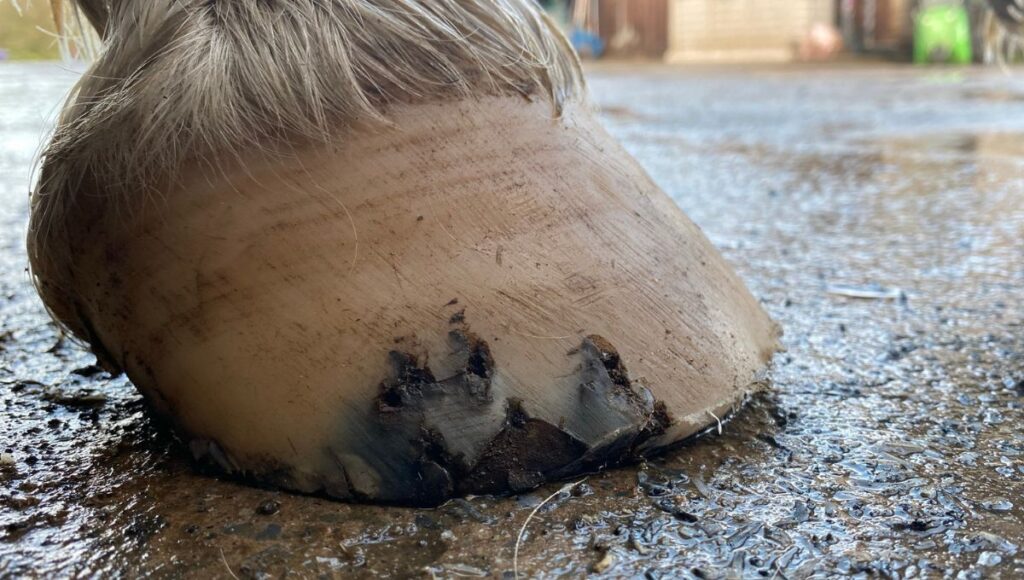
White line disease in shod horses
Shoes often prevent grit from becoming ingrained in the white line, however, shoes may create an anaerobic environment perfect for the proliferation of the opportunistic bacteria and fungus which attack keratin.
Nailing shoes automatically creates entry points for moisture and pathogens. Where the white line becomes extensive then nailing becomes more difficult as successful shoeing requires a well-attached hoof wall. When the hoof wall flexes around the nail, this creates additional damage which allows bugs to enter the hoof wall.
White line disease in barefoot horses
Barefoot horses can have their white line inspected frequently but this white line is not protected against ingress of dirt and small stones. Trimming can be done very frequently and problem areas cleaned, treated and packed to keep the cavity or crack free from debris.
What is the crena and how does it impact horse white line disease?
An area of vulnerability in all hooves whether barefoot or shod is the crena. The crena is a notch at mid-toe in the white line region. This notch comes in different shapes, sizes, and textures and might or might not extend to the outer hoof wall or up to the coffin bone.
The purpose and relationship of the toe “crena” to toe wall health are relatively unknown, as no formal research has been conducted about it. Not every horse has a crena on his foot (and on many horses it comes, goes, and evolves).
Where a horse has a crena it often becomes a vulnerable spot where mechanical force and stress creates disruption between the pigmented and non-pigmented hoof wall. To mitigate against this disruption the toe must be kept short and well backed up. This applies whether a horse is barefoot or shod.
Where there is disruption and the crena causes a cavity then cleaning the area, removing debris and either opening up or packing will be needed. This cleaning and packing may be needed for several weeks. Opening up the area will expose the cavity to air and as many of the organisms responsible for white line disease are anaerobic this will help kill them.
How does horse hoof balance affect white line disease?
When a foot is out of balance, or a biomechanical issue in the horse’s body is causing it to twist a foot or significantly weight one side of the foot over another, this can cause sufficient mechanical stress to apply a shearing force to the layers of the hoof wall.
This creates a lever force which can disrupt the hoof wall which then creates small defects at the ground-bearing surface of the wall. This can be more significant in a barefoot horse than a shod horse.
Trimming should aim to keep the toe short so that correct breakover timing is achieved. Trimming should address any medial, or lateral imbalance and remove flare in the lower third of the hoof capsule.
Barefoot horses do best when the hoof wall is kept short and a large bevel or Mustang roll is applied to the entire outer wall to keep the wall from chipping. It must be diligently maintained. It is very important that maintenance trims are done on barefoot horses before the hooves flare again.
Shod horses need a regular shoeing schedule that keeps the toe short and does not allow the hoof wall to grow too long and the shoe to then sit solely on the hoof wall. This situation in a shod horse means the hoof wall takes all the weight of the horse.
Nature intended the sole, hoof wall and the frog area to take the load. Where the hoof wall is unable to wear due to the application of a shoe, then when it grows it will become the main support structure and this is likely to cause mechanical stress which will affect the hoof wall connection.
What is the best topical treatment for hooves with white line disease?
We find that a combination of approaches and topical treatments works best, but remember the environment also has to be managed and an optimum forage-focused diet fed each day.
- Firstly cut away the hoof wall to open up the infected area
- Clean out any cavity and syringe with salty water
- Plug any cavity with cotton wool soaked in salt water, tea tree oil, oregano oil or White Lightening Gel
- Repeat the above three steps at least once per week till the infection has grown out
- Keep an eye on the area in case mechanical stress is contributing to the white line disease
- In very advanced cases, a hoof wall resection to expose and treat affected areas may be a chosen treatment. Ensuring the area is kept clean and dry during regrowth and scheduling regular farrier visits for proper healing and assessment will be vital in this situation.
Do not use chemicals which will damage live tissue on a cellular level. You may be contributing to the problem by creating dead tissue for pathogens to feed on.
Popular antifungal treatments that do not damage live tissue are salt water, White Lightning, 50% vinegar/water solutions and Golden Hoof which is zinc sulphate. Clean Trax is also somewhat effective.
Topical treatments on their own will not solve a problem which is caused by either poor nutrition not balanced to grass and hay or movement which causes uneven loading. Topical treatments work but only when coupled with a holistic approach.ses uneven loading. Topical treatments work but only when coupled with a holistic approach.
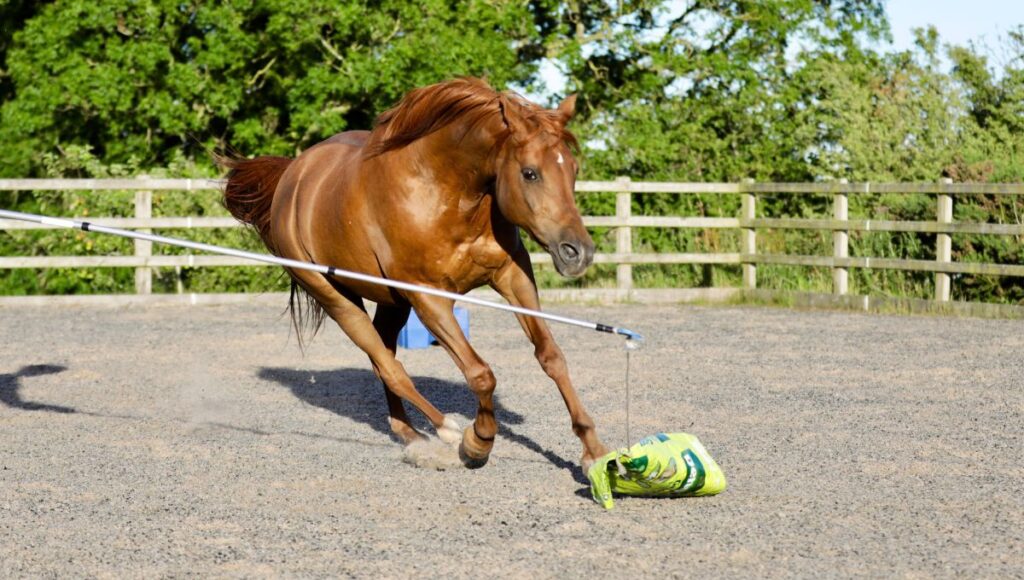
How can postural horse training help white line disease?
Horses, like humans, have a range of asymmetry and body movement patterns that will create loading stress points.
Many horses land on their toes, some to avoid a weak back third of the hoof and others because they have tight shoulders and a blocked trapezius area. A horse is supposed to land flat or slightly heel first at the walk, and heel first at the trot or canter. This is necessary for almost all of the shock-absorbing systems to work properly.
There are very few domestic horses, that have not been under competent natural hoof care and given an environment to develop the internal shock-absorbing structures, that can land heel first. This leads to underdevelopment of the back third of the hoof which is where the major shock-absorbing structures for the huge weight of the horse above are situated.
The interesting thing is how one thing leads to another. A horse with poor development of the back third of the hoof will toe first land due to pain. A toe-first landing then creates tighter shoulders and more pull on the dorsal aspect of the hoof and pulls the toe forward. When the toe is pulled forward the heels lengthen and come with it. Meanwhile, the area of the sole gets greater and the sole gets thinner which also causes discomfort.
A long toe affects white line disease at the toe because it creates a force which weakens the attachment of the white line to the hoof wall at the point where the crena is. More force means more mechanical prising and the likelihood that the crena will open up and allow bacteria and dirt into it.
Long heels take the frog out of load bearing and then the bony column of the leg loses its central support and is reliant on the relatively mobile hoof capsule. Any postural asymmetry will then be magnified meaning that the load causes the hoof to drift to one side or the other, medially or laterally.
Long heels that collapse also cause problems for the bars of the hoof and the frog because they always go hand in hand with a long toe. The frog and bar area of the hoof become overloaded and squashed which then results in too much pressure reducing circulation. The underlying digital cushion loses its ability to receive impact and the resulting compressed bars and soft, weak frogs are easily infected by fungus and bacteria.
The more people try to protect the sensitive frogs by scrubbing and trimming them, the worse the problem becomes because the root cause is an imbalance in the hoof capsule caused by incorrect loading from poor biomechanics.
Drift puts more pressure, force and load on one area of the hoof and causes the hoof wall connection to be weakened by imbalance leading to uneven loading. A weakened hoof wall connection will then allow opportunistic bacteria and fungus into the white line.
Unbalanced hoof landing is the reason for most joint problems, wall separation and navicular problems.
When a horse is forced to move in a biomechanically unbalanced way, no matter how well the hoof appears to be set up mechanically, the force will destroy the hoof’s attachment to a lesser or greater degree, perpetuating white line problems.
Reversing this problem needs to be a multi-pronged attack:
- Trim the hoof for a short breakover
- Leave the heels at a height which encourages movement towards a heel first landing
- Scoop the quarters to reduce pull and flare
- Put the hoof to work on stimulating surfaces which it can cope with, either in boots or barefoot. Never force horses to move on surfaces they are obviously sore on, this just creates more biomechanical dysfunction
- Use postural training using free horse work (no training aids) or work over poles and stretching on a line to free up the shoulders and build core muscle strength.
- Feed for hoof wall connection and strong keratin bonds by making sure minerals and vitamins are balanced to grass and hay and that protein is high enough to supply good levels of all the essential amino acids.
Obviously, imbalances can be helped with careful trimming, but biomechanical imbalances will need to be worked on through movement exercises which build strong body structures in the same way as human athletes. Sometimes the stresses placed on the wall are from poor conformation or joint problems such as arthritis. In this case the condition will just have to be managed with a combination of careful trimming, impeccable matched to grass and hay nutrition, and good hoof hygiene.
Summary: Addressing White Line Disease in Horses
White line disease in horses is a complex issue influenced by various factors, including nutritional deficiencies, hoof care, environmental conditions, and biomechanical imbalances. A holistic approach to managing and preventing this condition should address each of these aspects to improve the health of the hoof wall and its connection. Key factors and recommendations include:
Protein and Amino Acids:
- The hoof wall is over 90% protein, with keratin being the primary structural component.
- Essential amino acids like methionine and lysine are crucial for keratin production and hoof integrity.
- UK hay and haylage often have low protein levels, with over 85% containing less than the required 8% protein for adult horses.
- Supplementing with high-protein feeds (e.g., alfalfa, beet pulp, micronized linseed) and a dedicated protein supplement can help meet the nutritional needs, especially for young, breeding, or performance horses.
Vitamins for Hoof Health:
- Vitamin B6, folic acid, and biotin are essential for keratin production and hoof quality.
- Biotin supplementation of 30 mg per day is recommended to support hoof growth and recovery from white line disease.
Fats in the Diet:
- Omega-3 fatty acids are important for maintaining the integrity of the hoof’s outer layer.
- Micronized linseed is an effective supplement to provide omega-3s, especially during the UK winter or for horses on limited grazing.
Minerals for Hoof Integrity:
- Zinc and copper are critical for hoof structure, with zinc supporting cell activity and copper aiding in protein cross-linkages.
- A balanced mineral supplement with low iron and appropriate ratios of iron to copper to zinc (4:1:3) is essential for preventing deficiencies.
- Iron levels in UK forages are often high, which can block the absorption of zinc and copper, affecting hoof health.
Hoof Care Practices:
- Regular trimming and balancing of the hoof are crucial to prevent mechanical stress and leverage on the hoof wall.
- Both barefoot and shod horses require specific trimming techniques to manage white line disease effectively.
Biomechanical Considerations:
- Horses with unbalanced movement or poor posture are more prone to white line disease due to uneven hoof loading.
- Postural training, proper trimming, and balanced nutrition are vital to address biomechanical imbalances.
Topical Treatments:
- Topical treatments like saltwater, tea tree oil, and White Lightning Gel can help manage infections but should be used alongside nutritional and hoof care improvements.
This comprehensive approach can significantly reduce the risk of white line disease and promote stronger, healthier hooves in horses.
Download our latest eBook on hoof health by clicking below:

- Feeding Acetyl-L-Carnitine to Horses: Discover The Benefits - November 14, 2024
- Protect against White Line Disease in Horses - October 10, 2024
- Mycotoxins and the Horse - April 1, 2023
Last Updated on December 4, 2024 by Forageplus Team